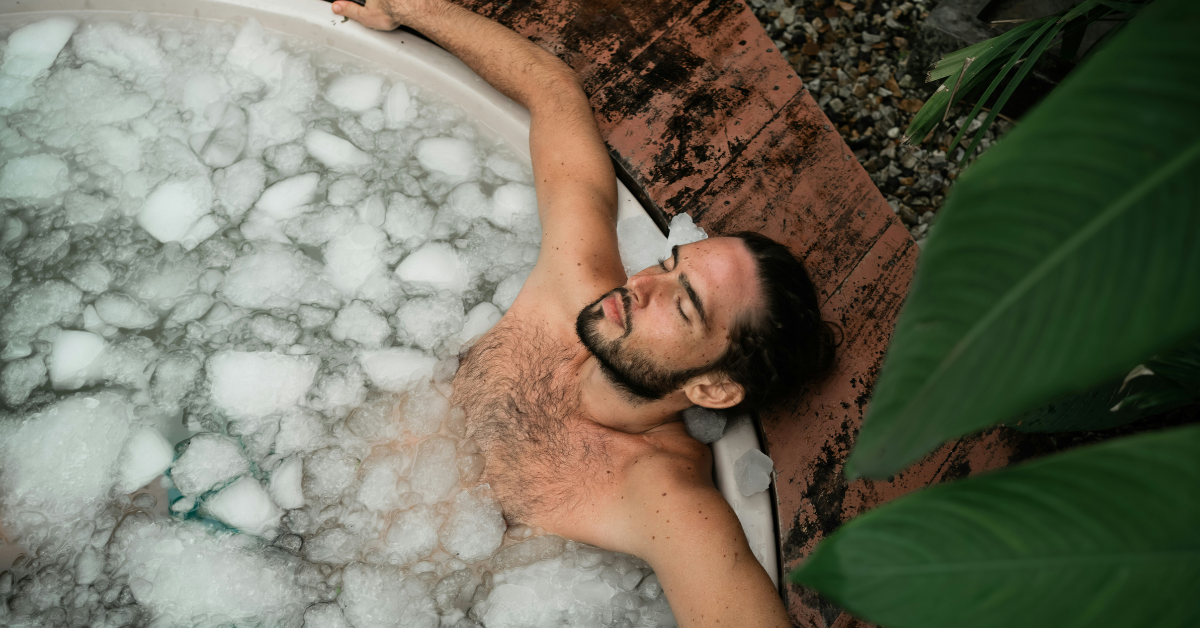
Cold water immersion (CWI), commonly known as cold plunging or ice bathing, has exploded in popularity across wellness centers, athletic facilities, and home backyards. Promoted for its ability to sharpen mental focus, elevate dopamine levels, reduce muscle soreness, and accelerate recovery, the cold plunge has become a morning ritual for millions of health-conscious individuals.
However, for strength athletes, bodybuilders, and anyone training with the explicit goal of maximizing muscle growth (hypertrophy), this trendy recovery tool presents a serious hidden drawback.
While submerging your body in freezing water feels like an aggressive proactive step toward recovery, applying cold water immersion immediately after a lifting session can significantly blunt the biological processes responsible for muscle growth. Understanding the molecular clash between cold exposure and hypertrophy allows you to keep cold plunging in your routine without sacrificing hard-earned strength and muscle gains.
The Molecular Cascades of Muscle Hypertrophy
To understand why ice baths interfere with muscle growth, it helps to examine how lifting weights triggers hypertrophy in the first place.
When you perform resistance training, your muscles experience mechanical tension and structural micro-damage. This mechanical stress acts as a cellular signal, initiating a complex cascade of physiological events:
- Acute Inflammation: Contrary to popular belief, post-exercise inflammation is not an enemy to be eliminated. It is a necessary signal. Infiltrating immune cells, such as macrophages, remove cellular debris and release growth factors that activate satellite cells (muscle stem cells).
- Satellite Cell Activation: These stem cells donate their nuclei to damaged muscle fibers, expanding the cell's capacity to synthesize new proteins.
- mTORC1 Signaling: Mechanical tension flips the molecular switch known as the mechanistic target of rapamycin complex 1 (mTORC1). mTORC1 directs ribosomes to assemble new muscle proteins, leading to muscle fiber thickening.
- Hyperemic Blood Flow: Sustained, elevated blood flow post-workout delivers essential amino acids, oxygen, and systemic hormones directly to the recovering muscle tissue.
This inflammatory and metabolic response represents the precise stimulus your body uses to adapt, rebuild, and grow stronger.
How Immediate Cold Plunging Suppresses Muscle Growth
When you plunge into 40°F to 55°F (4°C to 13°C) water immediately after lifting, you introduce a powerful thermal shock that directly opposes each step of the hypertrophic cascade.
Severe Vasoconstriction and Nutrient Starvation
The body's primary response to extreme cold is vasoconstriction—the narrowing of blood vessels to preserve core body temperature. When you submerge your limbs in ice water, localized blood flow to skeletal muscle drops dramatically and remains suppressed for hours after exiting the tub.
By severely reducing blood flow, cold plunging starves muscle tissue of circulating amino acids precisely when the rate of muscle protein synthesis (MPS) should be rising.
Blunted Inflammatory Signaling and Satellite Cell Suppression
Cold water immersion rapidly lowers muscle tissue temperature, suppressing the normal inflammatory response. While this attenuates delayed onset muscle soreness (DOMS), it also prevents immune cells from properly signaling satellite cells. Without robust satellite cell proliferation and fusion, long-term muscle repair and fiber remodeling are compromised.
Direct Inhibition of Muscle Protein Synthesis
Tracer studies measuring direct amino acid incorporation into muscle tissue have demonstrated that post-exercise cold water immersion reduces muscle protein synthesis rates by roughly 20% over a 5-hour recovery window compared to neutral water or active recovery.
Furthermore, cold exposure downregulates key downstream signaling proteins within the mTOR pathway, such as p70S6K, effectively turning down the volume on the body's internal protein-building machinery.
What the Research Shows: Long-Term Training Adaptations
The conflict between cold plunging and muscle growth is not merely a theoretical concern observed in acute laboratory settings. Long-term training studies confirm that immediate post-workout cold water immersion hinders muscle thickness and strength gains over time.
In a landmark study published in The Journal of Physiology by Roberts et al., researchers assigned active young men to a 12-week strength training program. Following each workout, one group performed 10 minutes of cold water immersion at 10°C, while the other completed an active cool-down on a stationary bicycle.
At the end of the 12 weeks, the active recovery group demonstrated significantly greater increases in muscle mass, muscle fiber cross-sectional area, and maximal strength compared to the cold plunge group. Subsequent research by Fyfe et al. corroborated these findings, proving that regular post-resistance training cold immersion systematically reduces long-term structural muscle adaptations.
How to Time Your Cold Plunge for Maximum Benefits
Fortunately, you do not need to abandon cold plunging entirely to build muscle. The key lies in understanding context, frequency, and timing.
1.0 to 6 Hours Post-Lifting: Avoid Cold Plunging: High Risk Window for Hypertrophy Interference. Avoid cold water immersion immediately after resistance training targeting muscle growth. During this critical 6-hour window, muscle protein synthesis signaling peaks. Applying cold exposure here blunts inflammatory signaling and reduces amino acid delivery.
2.6+ Hours Post-Lifting: Green Light for CWI: Safe Window for Cold Immersion. If you must plunge on a resistance training day, wait at least 6 hours post-workout, or ideally 8 to 12 hours. By this point, primary anabolic signaling pathways (mTOR) and satellite cell recruitment have already been established.
3.Morning Pre-Workout or Non-Lifting Days: Ideal Window for Mental & Circadian Benefits. Plunge in the morning before training, or on dedicated rest days. A cold plunge upon waking triggers a surge in norepinephrine and dopamine, boosting energy, focus, and mood without interfering with post-workout signaling.
4.Use Cold Plunges Strategically During Competition: Differentiate Your Training Goals. If your immediate goal is acute performance between tournament matches or multi-event competition days where acute soreness reduction matters more than long-term muscle growth, cold plunging remains an excellent tool.
Summary of Cold Plunge Timing Strategy
- Post-Hypertrophy Lifting: Avoid cold plunges for at least 6 hours (preferably 8–12 hours).
- Rest Days & Pre-Workout: Cold plunge freely for mental focus, dopamine elevation, and autonomic nervous system regulation.
- Endurance & Metabolic Conditioning: Cold plunging post-cardio is generally fine, as cardiovascular conditioning relies on mitochondrial biogenesis rather than local hypertrophic signaling cascades.
Conclusion
Cold water immersion remains a potent wellness tool for mental toughness, dopamine release, and systemic recovery. However, when used indiscriminately immediately after lifting weights, it acts as a metabolic fire extinguisher on the precise inflammatory processes required for muscle hypertrophy.
By separating your cold plunges from your strength training sessions by at least six hours, you can enjoy the powerful mental and physiological benefits of the cold without sacrificing your progress in the gym.