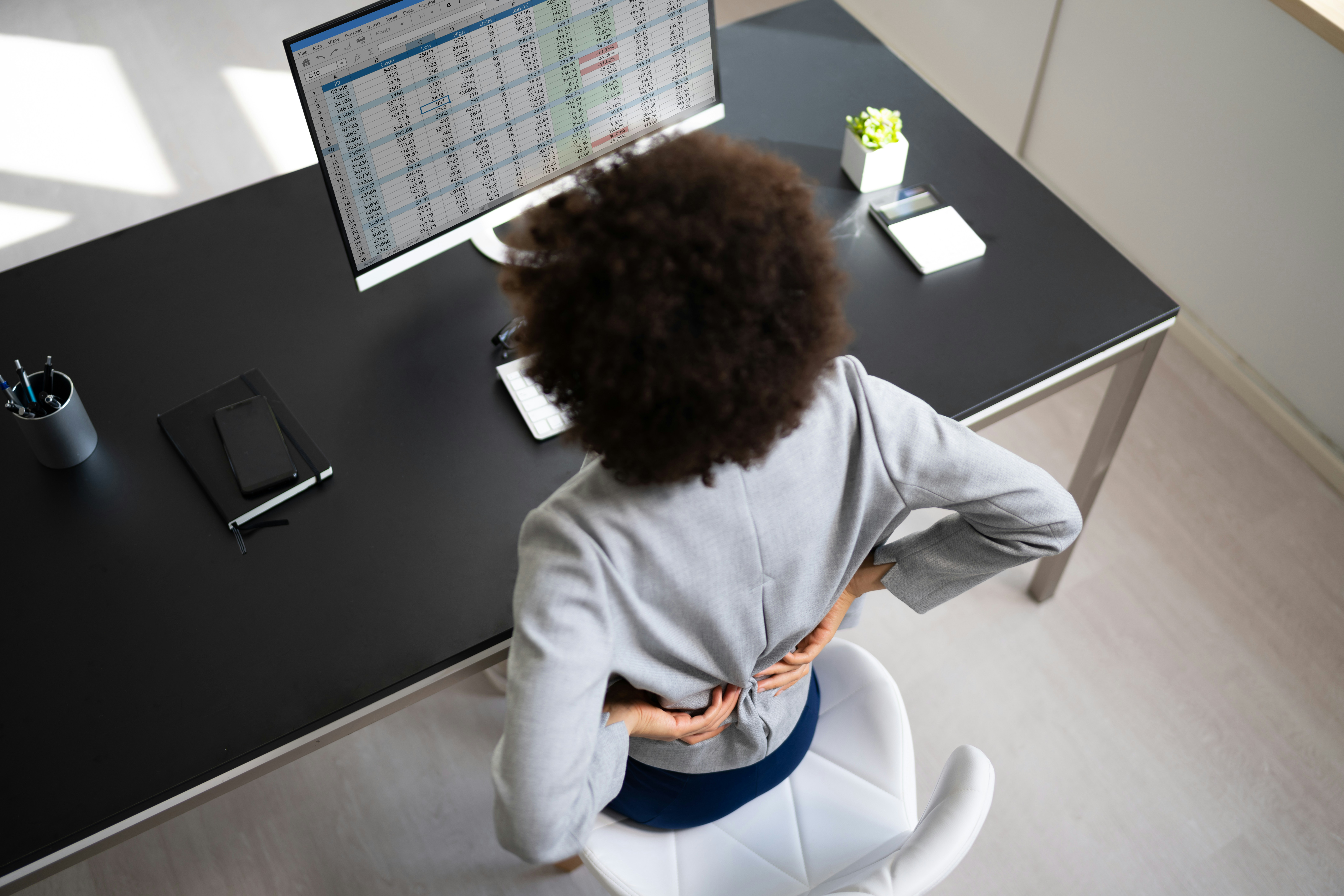
The human body does not operate in isolated blocks of time. Many individuals view their eight hours at an office desk and their one hour of intensive physical preparation as completely separate events. However, physiological tissue does not reset the moment you step onto the training floor. The structural patterns you reinforce during the workday follow you directly into your workout session. For individuals striving to meet elite fitness standards, poor office mechanics create a silent bottleneck that compromises safety and performance. To protect your joints and maximize your fitness performance, you must understand how fixing your desk posture directly safeguards your structure under heavy loads.
Chasing progression in strength and conditioning while spending the rest of your day slouching is an unsustainable approach to longevity. The structural adaptations caused by poor sitting habits will eventually manifest as chronic joint pain and premature physical breakdown.
The Structural Adaptations of Prolonged Sitting
When you sit in a slouched position for hours at a time, your body physically adapts to that specific shape. The human nervous system optimizes for efficiency, meaning it reinforces the postures you maintain most frequently. In a typical desk position, the shoulders round forward, the upper back curves, the neck extends to look at a monitor, and the hips remain in a constant state of flexion.
Over time, this chronic positioning leads to specific muscular imbalances. The muscles on the front of the body, including the chest and hip flexors, become short and tight. Conversely, the muscles on the back of the body, such as the upper back stabilizers and the glutes, become elongated and weak. When you attempt to transition from this compromised state directly into performance-based fitness movements, your joints are forced to operate in restricted, unaligned paths, which significantly increases the friction and wear on your connective tissues.
How Rounded Shoulders Block Overhead Power
A common structural adaptation of desk work is the forward rounding of the shoulder girdle. This positioning significantly reduces the space within the shoulder joint capsule, restricting your ability to safely raise your arms completely overhead.
When an athlete with restricted shoulder mobility attempts to execute an overhead press or a barbell snatch, the body must find the missing range of motion elsewhere. To force the weight overhead, the nervous system will compel the lower back to arch excessively, shifting the stress of the load away from the shoulders and onto the vulnerable lumbar vertebrae. This compensation pattern is a primary driver of lower back strains among lift enthusiasts. By actively correcting your desk posture and keeping your shoulders packed and neutral during the day, you preserve the natural range of motion required to press heavy weights safely without compromising your spinal integrity.
Pelvic Misalignment and Lower Body Force Production
The hip joint is another primary casualty of poor office habits. Remaining seated for extended periods causes the hip flexors to tighten, which can pull the pelvis into a forward tilt when you stand up. This forward pelvic rotation mechanically turns off the glutes and hamstrings, rendering them less effective during explosive movements.
For hybrid athletes who depend on total-body power, deactivated glutes create a major performance barrier. During a heavy back squat or deadlift, the body requires strong hip extension to move the weight. If the glutes cannot fire correctly due to a pelvis restricted by office habits, the lower back and knees must absorb the excess force. This structural compensation leads to patellar tendonitis and lower back fatigue. Fixing your seating mechanics keeps the pelvis neutral, ensuring that your primary prime movers can produce maximum force during intense conditioning and lifting cycles.
Systematic Strategies for Postural Maintenance
Correcting your desk mechanics does not require complex equipment or a complete disruption of your workday. It simply requires the same deliberate intent and structured approach that you bring to your mobility training and lifting logs. By introducing small, consistent adjustments to your workspace habits, you can protect your joint health and enhance your long-term athletic capability.
An effective strategy for office structural protection relies on several basic habits:
- Optimize Monitor and Chair Height: Position your screen directly at eye level to prevent forward head tilt, and adjust your seat so your feet rest flat on the floor with your hips slightly higher than your knees.
- Implement Frequent Movement Breaks: Set a reoccurring alarm to stand up and move every fifty minutes, forcing your body out of chronic hip flexion and encouraging blood circulation.
- Execute High-Tension Bracing Clears: Periodically reset your structure while seated by pulling your shoulders back, tucking your chin, and gently bracing your core to reinforce alignment.
- Integrate Targeted Extension Drills: Spend two minutes during the workday performing simple chest openers and upper back extensions to actively reverse the slouched position.
By treating these workplace adjustments as non-negotiable performance variables, you stop treating recovery as an afterthought and actively defend your joint integrity before you ever enter the gym.
The Intersection of Structure and Fitness Rankings
The evolution of performance-based fitness has highlighted the critical value of daily structural alignment. On credible fitness rankings platforms, an athlete's capability is judged by objective work output and total physical resilience. Individuals who maintain superior movement quality outside the facility are consistently the ones who sustain progress without experiencing debilitating setbacks.
When you take control of your daily posture, you are investing directly in your training longevity. You eliminate the hidden structural stress that undermines your strength and conditioning efforts, allowing your body to adapt fully to the training stimulus. This disciplined approach completely separates the dedicated performer from the casual gym-goer, ensuring that your physical preparation translates into real-world capacity and an elevated position on the leaderboard.
Conclusion
Athletic excellence is a full-time commitment that extends far beyond the perimeter of the training floor. Elite fitness standards cannot be achieved by ignoring your physical structure for the vast majority of the day and hoping to reverse the damage in a single hour of exercise. Your daily posture is the literal framework upon which your athletic potential is constructed. By fixing your desk mechanics and protecting your joints from chronic restriction, you build an injury-resistant body capable of tolerating extreme physical workloads over time. Reject the lazy habits of a sedentary lifestyle, treat your body with structural intent throughout the day, and let your superior joint health and measured performance define your path.