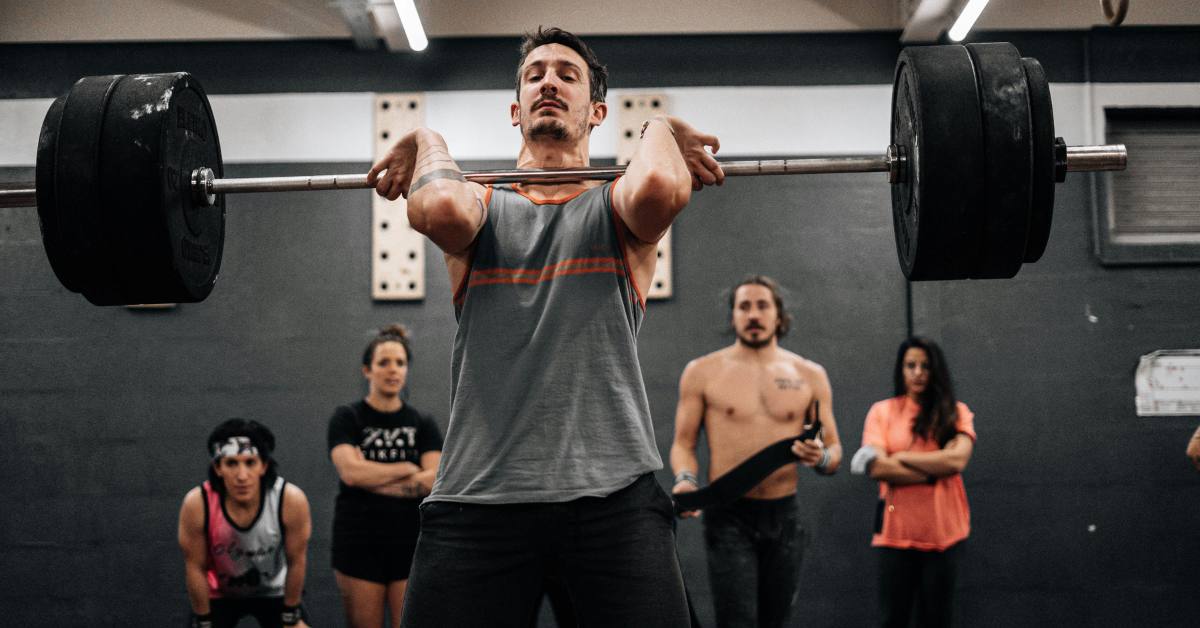
Walk into almost any modern gym, step into a functional fitness box, or scroll through a social media feed, and you will encounter an overwhelming display of athletic highlights. Heavy barbells slamming onto platforms, personal record (PR) celebration posts, and videos of breakthrough performances flood our screens daily.
In a world where everyone’s best lift is broadcast in high definition, it is natural to compare your progress against the people around you. You see a training partner add twenty pounds to their squat, or a peer on social media hit a bench press milestone you have been chasing for months, and an immediate psychological trigger fires: I should be lifting that too.
This psychological phenomenon is known as Social Comparison Bias.
While watching peers succeed can occasionally inspire hard work, letting social comparison dictate your daily training variables is one of the fastest ways to destroy long-term progression. Chasing someone else’s rate of progress ignores your individual biomechanics, disrupts structured periodization, and ultimately leads to training plateaus, severe burnout, and avoidable injuries.
The Evolutionary Root of Social Comparison
To understand why comparing your fitness to others is so tempting, you have to look at how the human brain evolved.
Psychologist Leon Festinger first articulated Social Comparison Theory in 1954, proposing that individuals have an innate drive to evaluate their own opinions, abilities, and status relative to others. In ancestral human hunter-gatherer groups, tracking where you stood in strength, speed, and skill relative to your peers was a survival mechanism. Being significantly weaker or less capable than the rest of the tribe could mean exclusion or reduced access to resources.
In the modern fitness environment, however, this survival mechanism is miscalibrated. Your brain encounters curated highlight reels of thousands of lifters worldwide—the top 1 percent of performances captured on their absolute best days.
When your ancient wiring compares your everyday training reality against a constant feed of peer highlights, it interprets your normal, steady progress as a failure, driving you to make reckless decisions on the gym floor.
Why Chasing Peer PRs Sabotages Physical Adaptations
Building long-term strength, muscle mass, and athletic capacity is fundamentally an exercise in physiology, not ego. When you alter your daily workout to match or beat a peer's performance, you violate several core principles of exercise science.
1. Ignoring Individual Biomechanical Blueprint
No two human bodies are built identically. Differences in femur-to-torso ratios, hip socket depth, muscle insertion points, tendon length, and fiber-type distribution heavily influence how much weight a person can move and how quickly they adapt to training.
- A lifter with short femurs and a long torso is naturally built to squat heavy loads with an upright posture and minimal joint strain.
- A lifter with long femurs will experience far higher shear stress on their lower back at the exact same load.
When you attempt to match the weight or volume of a genetically suited peer, you force your body into a workload it may not be structurally equipped to handle yet.
2. Disrupting the Principle of Progressive Overload
Sustainable progress relies on progressive overload—the gradual, systematic increase of stress placed upon the nervous system and muscular tissue over time. Optimal overload is measured in small increments (e.g., adding 2.5 pounds to a bar or adding a single repetition to a set).
Chasing a peer's PR forces you to abandon your own structured progression curve. Instead of taking a safe 5-pound step forward, you take a 20-pound leap to match your partner's set. This sudden jump overwhelms your connective tissue and nervous system, leading to technique breakdown and missed lifts instead of clean muscle stimulation.
3. Chronic Central Nervous System Fatigue
Attempting maximal or near-maximal lifts too frequently because a peer is doing so drains your Central Nervous System (CNS). Heavy lifting requires immense electrical output from your motor cortex.
When you constantly train at or near failure to keep pace with someone else, your nervous system loses its ability to recruit high-threshold motor units effectively. Over time, this leads to chronic systemic fatigue, poor sleep quality, diminished motivation, and a complete stall in strength gains.
The Trap of the Curated Highlight Reel
The rise of fitness social media has amplified Social Comparison Bias into a daily hazard. When you look at an online peer's breakthrough lift, you are seeing a micro-snapshot that hides critical context:
- The Invisible Backstory: You do not see their decade of baseline foundation, their sleep quality, their caloric surplus, or their potential use of performance-enhancing substances.
- The Failed Attempts: You rarely see the weeks of stalled weights, terrible workouts, or bad days that preceded that single successful 5-second video clip.
- The Recovery Differential: A college student with zero financial stress and 9 hours of sleep per night can recover from a workload that would destroy a working parent sleeping 6 hours a night.
Comparing your unedited daily reality to someone else’s polished highlight reel creates an impossible standard that erodes your training confidence.
How to Shift from Social Comparison to Self-Referenced Mastery
To escape the trap of chasing peer PRs and build a sustainable, long-term athletic baseline, you must replace external comparison with internal tracking.
1.Rule 1: Track Progress Against Your Own Past Data:Establish an Objective Baseline.Log every workout meticulously using a digital app or notebook. Measure your success exclusively against your own performance from 4 weeks, 6 months, or 1 year ago.
Beating your past self by a single rep or a two-pound increase is a definitive win, regardless of what anyone else in the room is lifting.
2.Rule 2: Stick to Prescribed Training RPE:Control Your Daily Variables.Use Rating of Perceived Exertion (RPE) or percentage-based programming to dictate your daily weights.
If your program calls for an RPE 8 (leaving 2 reps in reserve), hit that precise effort level even if your training partner is putting another plate on their bar. Discipline is sticking to your plan when your ego wants to compete.
3.Rule 3: Curate Your Fitness Environment:Protect Your Mental Baseline.Mute or unfollow social media accounts that trigger feelings of inadequacy or tempt you to make reckless training jumps.
Fill your feed with educational content that focuses on movement mechanics, recovery principles, and long-term programming rather than endless PR videos.
4.Rule 4: Value Movement Quality Over Barbell Load:Redefine the Goal of Every Session.Shift your primary metric of success from "how much weight was on the bar" to "how clean did the movement feel."
Executing a set with pristine technique, full range of motion, and total control builds far more long-term capability than grinding out a sloppy rep to match a peer.
Run Your Own Race
Fitness is a lifelong journey of physical self-discovery, not a short-term race against the person lifting on the platform next to you. Social comparison bias tricks you into sacrificing your long-term health for short-term ego validation.
By tuning out the noise of peer performances, respecting your unique biomechanics, and committing to your own individualized progression plan, you protect your joints, keep your nervous system fresh, and unlock continuous strength gains for years to come.