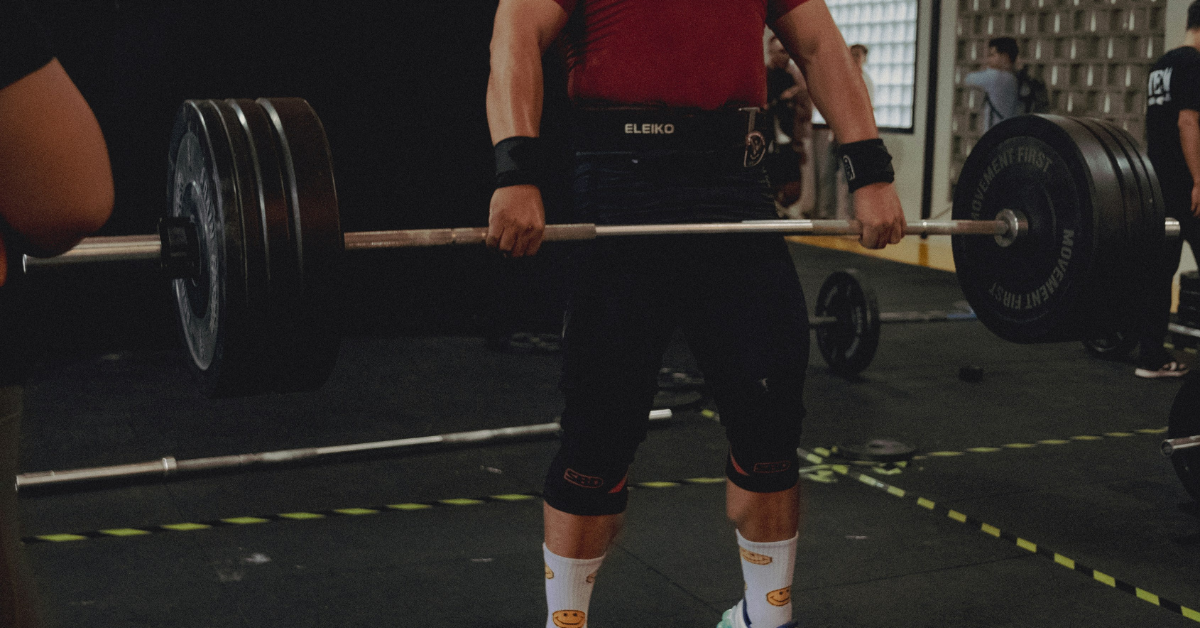
Step into almost any commercial gym, powerlifting dungeon, or functional fitness box, and you will see lifters strapping in before they even touch a warm-up bar. Thick leather weightlifting belts are pulled tight around waists for light warm-up squats, heavy-duty wrist straps are wrapped around bars for basic rows, and knee sleeves are pulled high before any work has even begun.
Supportive training gear has long been marketed as essential equipment for safety and maximal strength. Accessories like lifting belts, wrist wraps, and pull straps certainly have a legitimate place in high-performance athletics.
However, relying on these tools too early or too often creates a insidious problem known as the Gear Reliance Trap.
When you constantly wrap, strap, and brace yourself with external gear, you short-circuit your body's natural stabilization systems. Over time, heavy gear reliance turns external supports into crutches, weakening your intrinsic core stability, dulling neuromuscular feedback, and leaving your joints vulnerable the moment the gear comes off.
Understanding Your Intrinsic Anatomic Belt
Before exploring how lifting gear disrupts natural movement, it helps to examine how the human body stabilizes itself under heavy loads without external assistance.
Your torso contains a built-in, highly sophisticated anatomical stabilization system. This natural brace consists of four primary muscular structures:
- The Transverse Abdominis: The deepest layer of abdominal muscle that wraps horizontally around your midsection like a natural corset.
- The Respiratory Diaphragm: The dome-shaped muscle at the top of the abdominal cavity that creates downforce during inhalation.
- The Pelvic Floor Muscles: The muscular base of the pelvis that supports internal organs and caps the bottom of the abdominal cylinder.
- The Multifidus and Erector Spinae: The deep spinal muscles that stabilize individual vertebrae along the posterior column.
When you prepare to lift a heavy object, your brain initiates a process called intra-abdominal pressure generation. You take a deep, diaphragmatic breath into your belly, contracting your diaphragm downward while simultaneously contracting your transverse abdominis and pelvic floor inward.
This action compresses the fluid and tissue inside your abdominal cavity, transforming your soft midsection into a rigid, pressurized cylinder. This internal hydraulic pressure stabilizes your lumbar spine from the inside out, protecting your spinal discs without requiring any external gear.
How Weight Belts Alter Intra-Abdominal Pressure Dynamics
A lifting belt is designed to enhance intra-abdominal pressure by giving your abdominal wall an immovable surface to push against. When used correctly under near-maximal loads, a belt allows your core to generate significantly higher internal pressure, increasing spinal rigidity and helping you move heavier weights.
However, a serious problem arises when lifters use belts for every set, warm-up, or moderate exercise.
The Passive Bracing Crutch
When you wear a tight belt constantly, your brain learns to rely on the external friction and pressure of the leather strap rather than actively firing your transverse abdominis and deep spinal stabilizers. Instead of building dynamic, muscular stiffness from the inside out, you develop a habit of pushing outward against a passive constraint.
Over time, this alters your motor control patterns. Your deep core muscles become lazy because the belt is doing the stabilizing work for them.
The False Sense of Security
A lifting belt does not make your lower back invulnerable, nor does it correct poor movement mechanics. In fact, wearing a belt often gives lifters a false sense of security, encouraging them to lift weights their natural posture and core strength cannot handle.
If your spinal alignment collapses under a heavy squat, a belt will not save your lumbar discs from excessive shear forces.
Wrist Straps and the Neural Grip Connection
While weight belts affect core stability directly, wrist straps disrupt stabilization through a different neurological pathway: the loss of grip-induced irradiation.
In exercise physiology, irradiation refers to a phenomenon where the intense contraction of one muscle group recruits and amplifies the firing of neighboring muscle groups.
When you crush a barbell with a maximal, unassisted grip, a surge of electrical activity travels up your forearm, activating your biceps, triceps, shoulders, and deep core stabilizers. A strong grip sends a signal to your central nervous system that the body is holding a heavy object, triggering a protective co-contraction of the shoulder girdle and torso to keep your joints safe.
The Downside of Constant Strap Usage
When you wrap wrist straps around a barbell or dumbbell, you bypass the need for an active grip. The weight hangs passively from your wrists, requiring minimal forearm activation.
While this allows you to lift heavier loads when your forearms are fatigued, using straps on every pulling exercise creates distinct long-term drawbacks:
- Underdeveloped Grip and Forearm Strength: Your grip strength quickly falls behind your prime movers, making you entirely dependent on straps to lift even moderate weights.
- Reduced Shoulder Girdle Stability: Without the neural irradiation triggered by a tight grip, the deep rotator cuff and scapular stabilizers fire less effectively, increasing joint strain on the shoulders and elbows.
- Loss of Total-Body Tension: A loose grip leads to loose shoulders, which in turn leads to a soft core. Strap reliance breaks the kinetic chain before the lift even begins.
Breaking the Cycle: The Gear Integration Protocol
Escaping the gear reliance trap does not mean throwing your belt and straps in the trash. It means using them strategically as performance enhancers rather than permanent crutches.
1.Rule 1: Earn the Right to Wear Gear:Build Unassisted Baseline Strength.Complete all warm-up sets and working sets below 80 percent of your one-rep maximum completely unassisted.
If you cannot squat 225 pounds safely without a belt, you should not be putting a belt on for that weight. Reserving gear for top-tier intensity forces your natural stabilization systems to develop alongside your prime movers.
2.Rule 2: Master 360-Degree Diaphragmatic Breathing:Re-Establish Natural Intra-Abdominal Pressure.Practice breathing into your lower stomach, sides, and lower back without any gear on.
Learn to expand and brace your abdominal cylinder naturally before introducing a belt into your high-intensity sets.
3.Rule 3: Save Straps for Final Burnout Sets Only:Train Grip and Irradiation Explicitly.Perform all primary pulling movements, such as deadlifts, rows, and chin-ups, double-overhand and unassisted for as long as your grip holds out.
Only strap in on your final heavy back-off sets when grip fatigue becomes a true bottleneck to target muscle stimulation.
4.Rule 4: Add Unassisted Anti-Rotation Work:Incorporate Unilateral Stabilizing Movements.Dedicate time in your training routine to movements that challenge core stability without external support, such as farmer carries, suit-case deadlifts, and Pallof presses.
Carrying heavy weights in one hand without a belt forces your oblique and transverse abdominis network to fire at maximum capacity.
Reclaim Your Intrinsic Power
Supportive gear like weight belts and wrist straps can be valuable tools for pushing past performance plateaus and setting personal records under heavy loads. However, when these accessories become a mandatory requirement for every workout, they quietly undermine the very foundation of your athletic development: your internal stability, grip strength, and motor control.
By shedding the gear during warm-ups and moderate working sets, relearning active intra-abdominal bracing, and training your raw grip, you break free from the gear reliance trap. Rebuilding your natural anatomical belt ensures that your core remains strong, resilient, and capable of supporting your strength wherever your training takes you.