Why Hips and Shoulders Matter Most
At FitRank, performance is measured through consistency, control, and adaptability. Mobility training sits at the center of all three. When hips and shoulders move efficiently, everything else improves, from lifting mechanics to posture, from running economy to injury resilience. The goal is not temporary flexibility, but usable range of motion that translates into better performance.
Mobility as a Performance Strategy
Mobility training is most effective when it is consistent and intentional. It should not feel like a separate task, but rather a built-in component of training.
A structured approach focuses on:
- Controlled movement over passive stretching
- Breathing and positioning to unlock range
- Repetition over intensity
This routine is designed to be simple enough to repeat daily, while still addressing the most common restrictions in hips and shoulders.
The Ultimate Mobility Routine
This sequence can be completed in 10 to 15 minutes and requires minimal space. The emphasis is on control, not speed.
1. Hip Flexor Lunge with Reach
Start in a low lunge position, with the back knee on the ground. Keep the torso upright and gently shift the hips forward. Reach the arm on the same side as the back leg overhead.
Focus on:
- Keeping the core engaged
- Avoiding lower back arching
- Breathing steadily through the stretch
This movement opens the front of the hips while integrating the upper body.
2. Deep Squat Hold with Rotation
Drop into a controlled squat, keeping the heels grounded. Use the elbows to gently press the knees outward. From this position, rotate one arm upward, following it with your eyes.
Focus on:
- Staying balanced through the feet
- Maintaining a tall chest
- Moving slowly through each rotation
This develops hip mobility while improving thoracic spine movement, which directly impacts shoulder function.
3. 90/90 Hip Transitions
Sit on the ground with both knees bent at 90 degrees, one in front and one to the side. Rotate the legs from side to side without using the hands if possible.
Focus on:
- Smooth, controlled transitions
- Keeping the torso stable
- Moving within a comfortable range
This builds rotational control in the hips, an often overlooked component of mobility.
4. Shoulder CARs (Controlled Articular Rotations)
Stand tall and slowly move one arm through a full circular range of motion, keeping the rest of the body still.
Focus on:
- Moving as slowly as possible
- Avoiding compensations through the spine
- Controlling every part of the circle
This exercise develops joint awareness and active control in the shoulders.
5. Wall Slides
Stand with your back against a wall, arms bent at 90 degrees. Slide the arms upward while keeping contact with the wall.
Focus on:
- Keeping the lower back neutral
- Maintaining contact through the arms
- Moving within a controlled range
Wall slides reinforce proper shoulder positioning and posture.
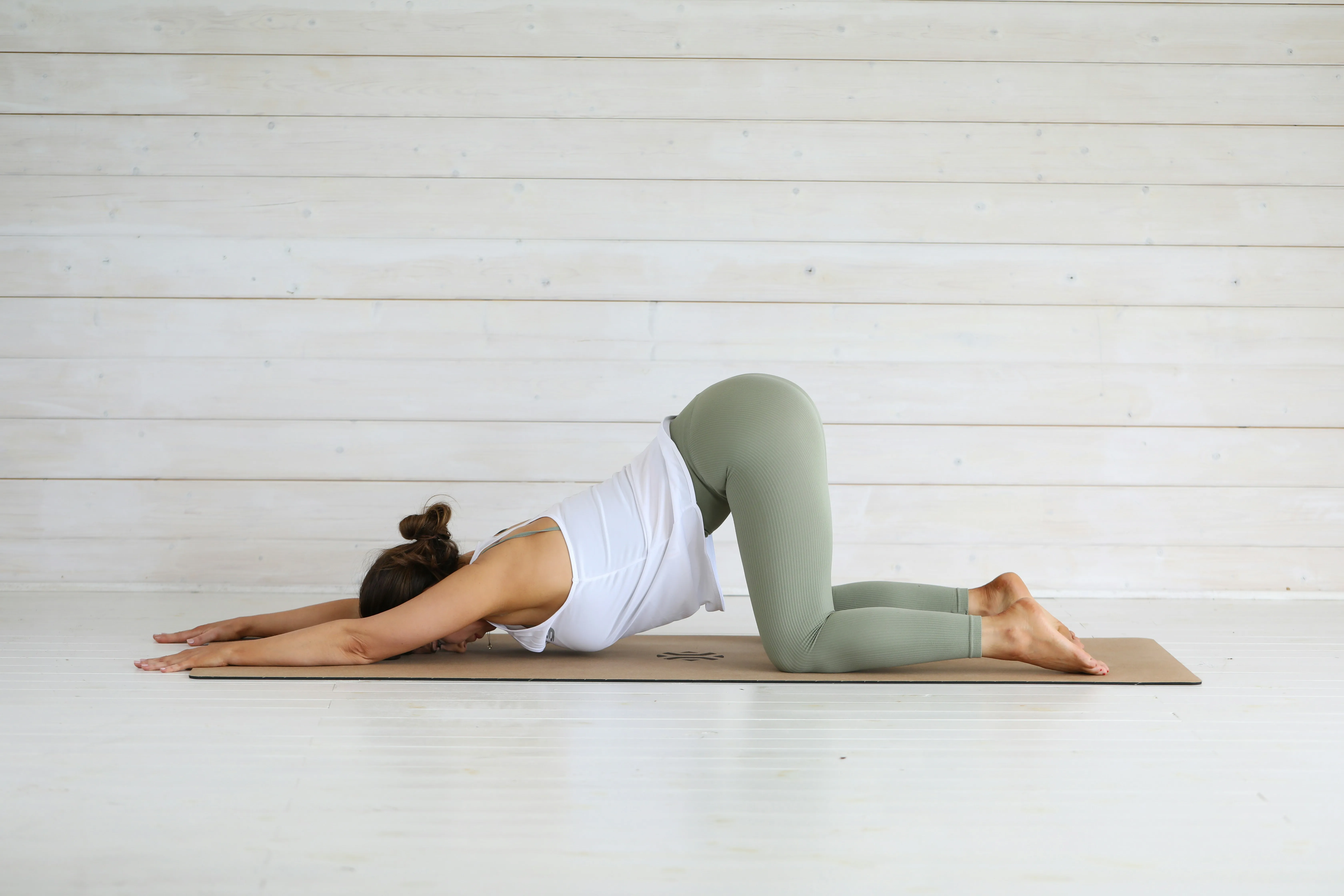
6. Child’s Pose with Side Reach
From a kneeling position, sit back into a child’s pose. Walk both hands to one side to create a stretch through the opposite shoulder.
Focus on:
- Relaxed breathing
- Gradual movement into the stretch
- Holding each side evenly
This releases tension while improving overhead mobility.
Building Consistency Over Intensity
The effectiveness of this routine comes from repetition. Mobility gains are not achieved through occasional effort, but through consistent practice. Even a short daily session creates meaningful improvements over time.
A few guiding principles:
- Move with intention, not speed
- Stay within a controlled range
- Focus on quality over quantity
Over time, these small inputs compound. Movement becomes smoother, positions feel more natural, and performance improves without forcing it.
The Foundation of Long-Term Progress
The athletes and creators who stand out over time are not the ones chasing intensity at all costs. They are the ones who build complete systems, where strength, control, and mobility work together.
If you are serious about progressing, start here. Refine how you move. Stay consistent. Build range that you can actually use. Because real performance is not just about how much you can do, it is about how well you can move while doing it.