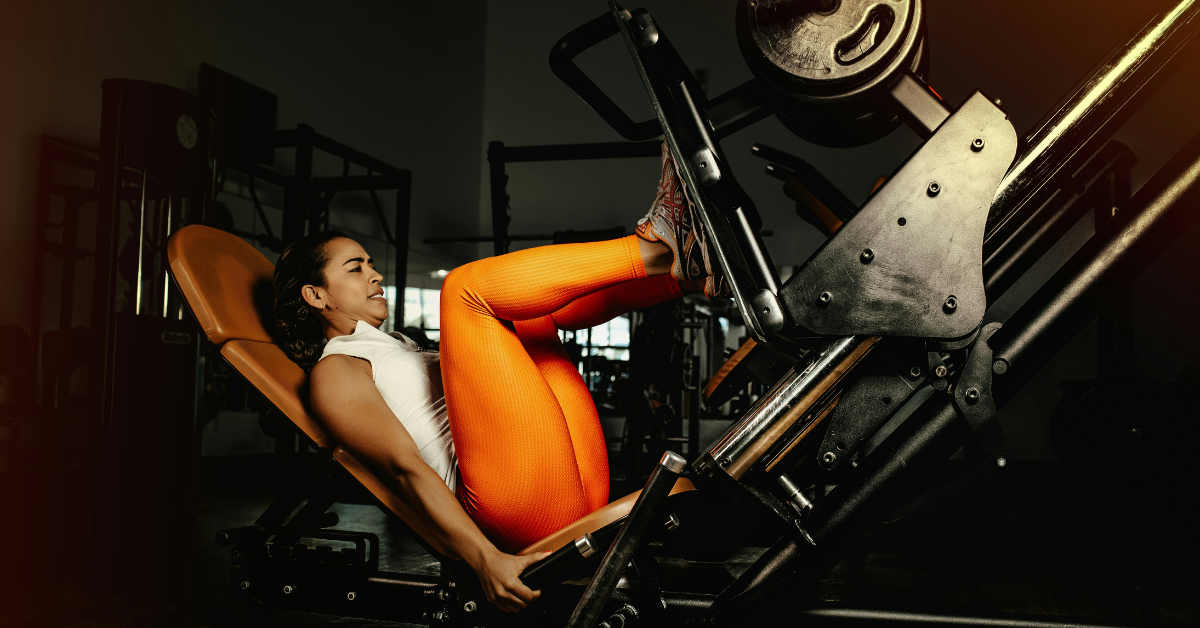
Ask almost any strength enthusiast about their favorite compound lower-body builders, and the leg press will inevitably enter the conversation. Capable of overloading the quadriceps without placing heavy axial loading on the spine, the leg press is a staple machine in bodybuilders' and athletes' routines alike.
Yet, walk into any commercial gym, and you will witness a common, frustrating pattern: lifters loading plate after plate onto the sled, only to lower it a mere three inches before pushing it back up. Or, if they do attempt full range of motion, their knees collapse inward, their feet lift off the platform, and their hips pitch out of position at the bottom of the movement.
When lifters struggle to achieve depth on the leg press, they usually assume the issue is poor hamstring flexibility or weak quads. But more often than not, the true culprit lies down at the feet and ankles.
Enter toe screwing (often called "screwing your feet into the platform")—an intentional subtle ankle rotation and foot engagement cue that creates instant hip stability, eliminates knee valgus, and safely unlocks deeper, pain-free range of motion.
The Root Problem: Ankle Instability and Knee Valgus
To understand why "toe screwing" works, it helps to examine what goes wrong during a restricted, uncomfortable leg press setup.
When you lower a heavy leg press sled toward your chest, your hips, knees, and ankles must flex simultaneously. If your feet sit flat and passive on the footplate, two major mechanical flaws frequently occur:
- Foot Pronation and Arch Collapse: As the weight descends, your midfoot flattens and your arches collapse inward.
- Knee Valgus (Inward Buckling): As the foot pronates, the tibia (shin bone) rotates internally. This causes the knees to cave inward toward each other.
When your knees cave inward, the head of your femur (thigh bone) pinches against the acetabulum (hip socket). This structural pinch—known as hip impaction—physically stops your hips from descending any further. Your brain senses this structural block, panics, and halts the descent, leaving you stuck with shallow, quarter-rep depth.
Trying to force extra depth through knee valgus often leads to your lower back rounding off the pad (butt wink) or severe stress on the patellar tendons.
What Is "Toe Screwing"?
Toe screwing is a active neurological cue designed to lock the ankle joint into a rigid, stable position while creating external rotation up the entire kinetic chain.
Rather than letting your feet rest passively on the platform, you actively initiate an outward twisting force through the balls of your feet and heels without actually moving your feet from their fixed spot.
By attempting to "screw" your right foot clockwise and your left foot counterclockwise into the plate, you accomplish three major structural shifts:
- Creates Torque: The twisting action creates isometric torque through the ankles, shins, and hips.
- Engages the Subtalar Joint: It sets the ankle in a subtle supinated position, raising the medial longitudinal arch and turning the foot into a rigid lever.
- Fires the Gluteus Medius: External rotation at the ankle signals the upper hip muscles—specifically the gluteus medius and deep hip rotators—to turn on and pull the thighs outward.
How External Rotation Opens the Hip Capsule
The primary reason toe screwing unlocks deeper leg presses comes down to hip joint anatomy.
The hip is a ball-and-socket joint. When your knees track straight forward or collapse inward during a press, the top of the femur approaches the front lip of the hip socket very quickly.
However, when you apply torque through the ankles and screw your toes outward, your thighs externally rotate and abduct (move slightly away from the midline). This shifts the head of the femur into a position within the hip socket that provides far more clearance.
By clearing space in the hip joint capsule, your thighs can safely travel past the sides of your torso rather than slamming directly into your ribs or hip flexors. The result? You can easily lower the sled several inches deeper without rounding your lower back off the pad.
Step-by-Step Execution: How to Screw Your Feet on the Leg Press
Unlocking deeper depth using this cue is simple, but it requires mindful execution before you push your first rep.
Step 1: Set Your Base
Place your feet roughly shoulder-width apart in the center of the leg press platform. Set your toes at a slight outward angle (roughly 10 to 15 degrees).
Step 2: Grab the Footplate with Your Toes
Before unclipping the safety handles, spread your toes wide and grip the platform. Think about creating a "tripod foot"—distributing equal pressure across the heel, the base of the big toe, and the base of the pinky toe.
Step 3: Twist Outward Without Sliding
Visualizing your right foot as a clockwise dial and your left foot as a counterclockwise dial, try to twist both feet outward against the metal plate. Your feet will not actually shift position because friction holds them in place, but you will feel your arches lift, your ankles stiffen, and your glutes tighten.
Step 4: Maintain Torque Throughout the Ascent and Descent
Unclip the weight and begin lowering the sled. Keep that outward twisting tension constant. As the weight comes down, your knees should naturally track over your pinky toes, allowing your thighs to clear your torso safely for a maximum, deep quadriceps stretch.
Common Pitfalls to Avoid
While the toe screwing cue is highly effective, misinterpreting the movement can lead to new mechanical issues:
- Over-Supinating (Rolling onto Outer Edges): You want to create rotational torque, not tilt your feet off the platform. The base of your big toe must stay firmly glued to the platform at all times.
- Flaring Knees Excessively: The goal is natural knee tracking, not forcing your legs into a wide frog-like split. Your knees should point in the exact same direction as your toes.
- Lifting the Heels: Ensure the rotational force originates through the entire foot tripod, keeping your heels firmly planted so force transmits through the glutes and quads rather than stressing the Achilles tendon.
Key Takeaways
If your leg press feels awkward, pinches your hips, or forces you into half-reps, stop blaming your quad strength and start looking at your ankle rotational torque.
- Fix your foundation: Passive feet lead to collapsed arches, knee valgus, and early hip impaction.
- Screw your feet into the plate: Isometrically rotating your ankles outward creates torque that fires your glute medius and stabilizes your entire lower body.
- Open up the hips: External ankle rotation moves the femur into an optimal position within the hip socket, allowing your thighs to bypass your torso for maximum, safe depth.
By dialing in ankle rotation through the toe screwing cue, you will protect your knees, stabilize your hips, and finally tap into the full, muscle-building range of motion the leg press has to offer.