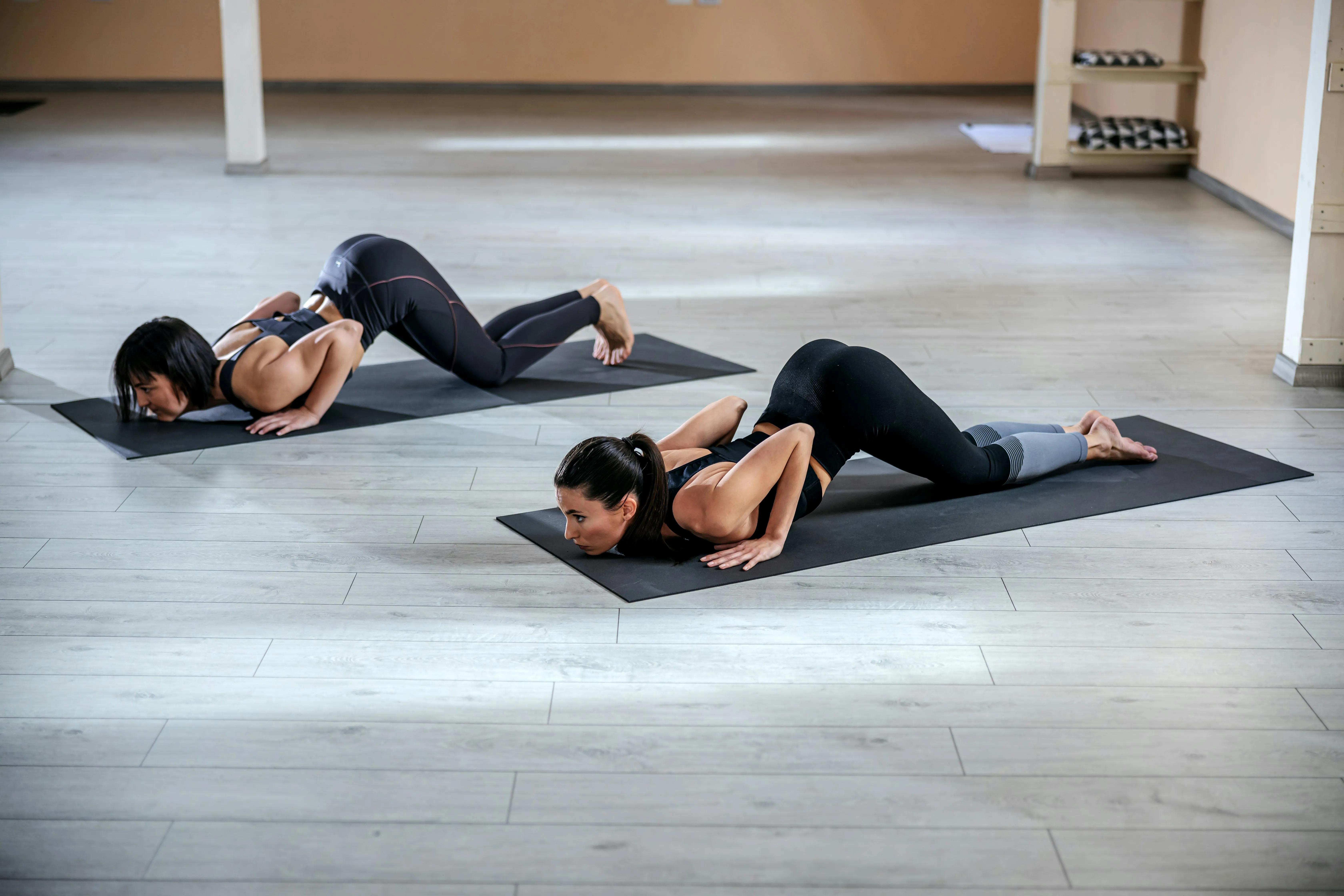
Integrating Yoga into Your Routine
Yoga is a fantastic way to improve flexibility, balance, and mental clarity. It complements other forms of exercise by promoting recovery and reducing stress. Incorporating yoga into your fitness routine can enhance your overall well-being.
The Mobility Audit: Yoga as a High-Performance Mechanical Advantage
In the hierarchy of modern athletic development, a profound shift is occurring. The traditional "grind at all costs" mentality is being replaced by a sophisticated, editorial-grade understanding of human movement. At the center of this evolution is a reassessment of yoga—moving it from the periphery of "stretch classes" to its rightful place as a corrective engine for the elite performer. For the athlete operating at the intersection of high-force output and endurance, the various routes within yoga are not merely lifestyle choices; they are distinct mechanical protocols.
To build a rank-worthy profile, the practice must be stripped of its superficial hype and reassessed through the lens of joint kinematics, fascial elasticity, and central nervous system (CNS) modulation. When we analyze the sheer breadth of "routes" within the yoga tradition, we find a toolkit that addresses every pillar of the FitRank philosophy: performance, longevity, and multidimensionality.
The Modality Matrix: Periodizing the Route
In a professional-grade training cycle, the selection of a yoga style is a periodized decision. Just as a coach wouldn't prescribe heavy triples during a deload week, an athlete shouldn't choose a yoga modality at random. Each route offers a specific physiological solve for the unique stressors of a hybrid strength and conditioning program.
The Route of Mechanical Tension: Yin and Hatha
While the gym focuses on the contractile properties of muscle tissue, Yin yoga targets the non-contractile fascia and deep connective tissues. By holding static positions for three to five minutes, the athlete induces a "creep" response in the collagen fibers. This is essential for maintaining joint health under the heavy axial loading of squats and deadlifts. It is the "quiet" work that ensures the structural chassis remains resilient.
Hatha yoga, conversely, serves as an isometric stability test. It forces the athlete to own their end-range of motion—a prerequisite for technical proficiency. Holding a challenging Hatha pose is a laboratory for perfecting the internal tension required to stabilize a heavy overhead press or a high-velocity sprint. It is about building a body that is as stable as it is supple.
The Route of Proprioceptive Flow: Vinyasa and Power
Flow-based practices are less about "stretching" and more about active neuromuscular control. Vinyasa requires the body to navigate through multi-planar transitions while under strict breath control. This builds the proprioceptive awareness needed to make split-second adjustments during a high-stakes evaluation or an unpredictable outdoor trail run. For the hybrid athlete, this route serves as a form of supplemental conditioning, building muscular endurance and balance without the joint-crushing impact of high-volume plyometrics.
The Route of Neurological Reset: Restorative and Yoga Nidra
The most overlooked aspect of the ranking process is the transition from a sympathetic (fight-or-flight) state to a parasympathetic (recovery) state. Restorative yoga acts as a technical reset for the CNS. By utilizing props to eliminate muscular effort, the athlete signals to the brain that the "threat" of training is over. This accelerates systemic repair, ensuring that the inflammatory response of a hard session doesn't turn into chronic fatigue.
Mobility as a Competitive Advantage
The editorial standard for movement quality distinguishes clearly between passive flexibility and active mobility. A ranked athlete does not need to be "flexible" in a vacuum; they need to be mobile under tension. Yoga, when applied as a performance strategy, bridges this gap. It teaches the body to recruit stabilizing muscles at the outer limits of its range, ensuring that the structural integrity of the joints is maintained even when exposed to maximal force.
This is where mobility becomes a competitive advantage. It is the difference between a squat that is limited by hip "stickiness" and one that is executed with a deep, effortless range of motion. It is the difference between a runner whose stride is clipped by tight hip flexors and one who moves with fluid, efficient power. By integrating these yoga routes, the athlete moves away from the superficial and toward a foundation of multidimensional resilience.
Fascial Elasticity and the Kinetic Chain
Modern sports science has revealed that the fascia—the web of connective tissue surrounding our muscles—is a primary player in force transmission. Traditional strength training can sometimes lead to fascial "adhesions" or stiffness that limits power output. Yoga provides a targeted method for maintaining fascial elasticity.
By moving through the various routes of yoga, an athlete addresses the entire kinetic chain. They learn to identify where "energy leaks" are occurring—perhaps a tight ankle is causing a knee collapse, or restricted thoracic mobility is hindering an overhead lift. Yoga provides the diagnostic tools to find these leaks and the corrective movements to plug them. This is the essence of substance over popularity: doing the unglamorous work that results in a more powerful, more durable athlete.
The Psychological Infrastructure: Breath as a Technical Tool
The mat is often the only place where a high-performance athlete is forced to confront the monotony of stillness. This builds a unique psychological infrastructure. Breathwork (Pranayama) within yoga is not a meditative byproduct; it is a technical tool for heart rate variability (HRV) management.
Mastering the ability to stay composed during a three-minute Yin hold or a challenging balance transition translates directly to the mental resilience required in the field. It is the same composure needed to stay focused during the final mile of a conditioning test or the final rep of a maximum-effort set. By using the breath to regulate the nervous system, the athlete learns to toggle between "high-alert" and "high-focus," a skill that is indispensable during a structured evaluation.
Longevity Over Aesthetics: The Final Frontier
The ultimate goal of any rank-worthy program is longevity. Yoga is the insurance policy for the high-performing body. While strength training builds the engine, yoga ensures the suspension and the steering remain precise. It counteracts the repetitive stress of sport and the sedentary demands of modern life, ensuring that the athlete doesn't just peak for a season, but performs for a lifetime.
When we look at the evolution of strength culture, we see a move toward this holistic view. The "meathead" archetype is dead; the modern elite is a student of movement, a practitioner of recovery, and a master of their own internal state. Yoga is the vehicle for this mastery.
Editorial Integration: A Weekly Strategy
To achieve a professional-grade result, yoga must be integrated with the same calculated intent as any other training pillar. A clean and modern weekly cycle might look like this:
- Post-Force Flush: 20 minutes of restorative postures following a maximal effort session to mitigate the CNS "hangover" and initiate recovery.
- The Mobility Priming: Short, dynamic Hatha movements used as a pre-lift ritual to open the specific kinetic chains required for the day's training (e.g., hip opening before a squat session).
- The Recovery Anchor: A full-length (60–75 min) Yin or Hatha session on a non-loading day to address cumulative fascial tension and promote systemic longevity.
Yoga is a journey of the self, through the self, to the self.